Handcrafts
Simple projects to nurture creativity.
Handwork
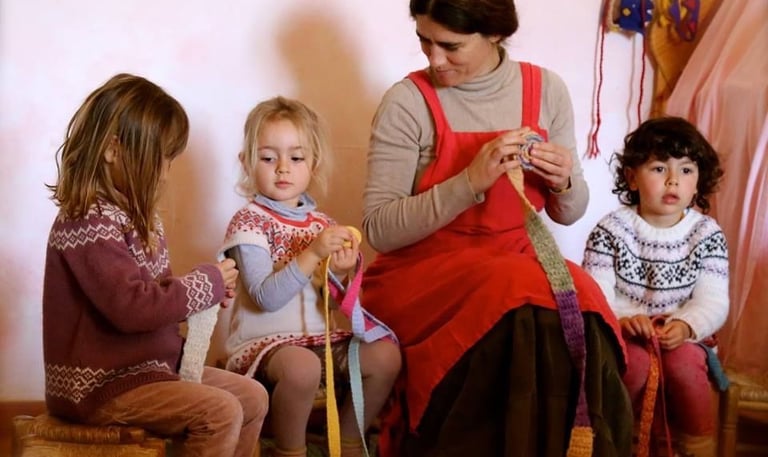
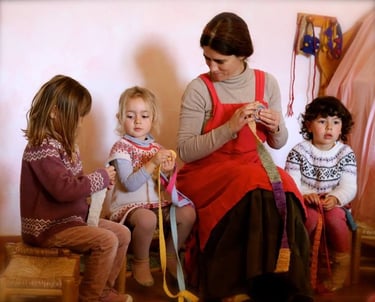
Handwork holds a central place in Waldorf education as a way of nurturing the whole child through meaningful, hands-on activity. Through knitting, sewing, woodworking, and other manual tasks, children develop fine motor skills, coordination, patience, and concentration.
More than a technical skill, handwork supports cognitive development and emotional balance. The rhythm of the hands working with natural materials strengthens focus and inner calm, while fostering perseverance and confidence. Each finished piece carries the experience of effort, care, and creativity.
In Waldorf pedagogy, manual work connects thinking, feeling, and willing, grounding learning in lived experience and supporting healthy human development.
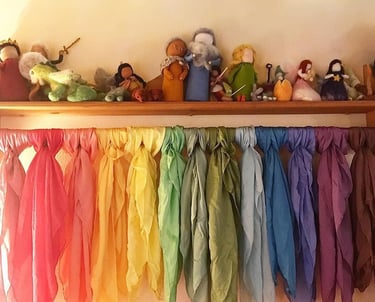
Material Lists
Early Childhood / Kindergarten
– Beeswax crayons (block and stick)
– Natural beeswax modeling wax
– Watercolor paints and thick watercolor paper
– Wooden crayons holder
– Cotton or wool pencil case
– Simple apron or smock
Grade 1
– Block crayons and stick crayons
– Main lesson book (blank, high-quality paper)
– Watercolor paints and brushes
– Wooden ruler
– Beeswax modeling wax
– Lyra or similar colored pencils
Grade 2
– Main lesson books
– Block and stick crayons
– Colored pencils
– Watercolor set
– Simple fountain pen or quality pencil
– Beeswax modeling wax
Grade 3
– Main lesson books
– Colored pencils
– Watercolor paints
– Recorder (pentatonic, if required)
– Beeswax modeling wax
– Simple handwork materials (wool yarn, needles)
Grades 4–5
– Main lesson books
– Colored pencils and graphite pencils
– Fountain pen
– Geometry compass and ruler
– Watercolor paints
– Handwork materials (crochet or knitting)
Grades 6–8
– Main lesson books
– Fountain pen and ink
– Geometry set (ruler, compass, protractor)
– Colored pencils
– Watercolor paints
– Handwork or craft materials (wood, sewing tools)
Join Us
Receive gentle guidance for mindful family living