Embracing the Rhythm of Conscious Childhood
At living anthroposophy, we share gentle insights and practical tips to nurture your family's daily flow with Waldorf-inspired wisdom.
5/8/20242 min read
Anthroposophy: Foundations for a Conscious Way of Living
Anthroposophy, developed by Rudolf Steiner in the early twentieth century, is a spiritual-scientific path that seeks to understand the human being in their fullness — body, soul, and spirit. Rather than offering fixed doctrines, anthroposophy invites an active, conscious relationship with life, knowledge, and inner development.
At its core, anthroposophy views the human being as an evolving being, shaped not only by biological and social forces, but also by inner purpose, moral freedom, and spiritual growth. This perspective influences how we approach education, health, agriculture, art, and social life.
The Threefold Nature of the Human Being
A central anthroposophic concept is the understanding of the human being as a unity of:
Body, our physical and sensory foundation
Soul, the realm of feeling, imagination, and inner life
Spirit, the source of individuality, meaning, and conscious will
Health and well-being arise when these dimensions are in dynamic balance. This principle underlies anthroposophic medicine, Waldorf education, and biodynamic agriculture.
Human Development as a Living Process
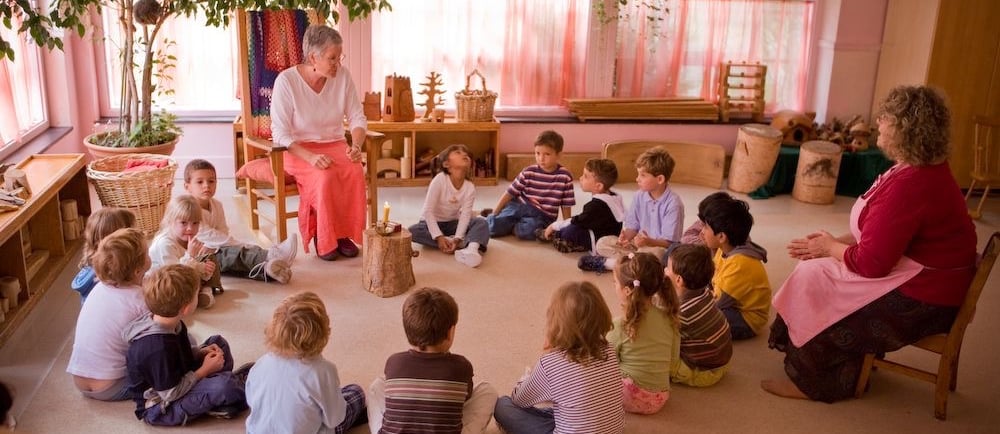
Anthroposophy recognizes human development as a rhythmic, stage-based journey. Childhood, adolescence, and adulthood are seen as distinct phases, each with unique needs and capacities. Especially in early childhood, learning occurs through imitation, movement, and sensory experience, rather than intellectual abstraction.
This understanding forms the foundation of Waldorf education, where teaching methods are aligned with the developmental stage of the child, nurturing not only cognitive skills but emotional and moral strength.
Freedom, Responsibility, and Inner Work
Unlike belief-based systems, anthroposophy emphasizes freedom of thought. It encourages individuals to engage in inner work — cultivating awareness, ethical sensitivity, and self-knowledge — as a path toward conscious action in the world.
Through artistic activity, observation of nature, reflective thinking, and mindful daily practices, anthroposophy seeks to awaken a deeper relationship between the human being and the living world.
Anthroposophy in Daily Life
Anthroposophy is not meant to remain theoretical. It expresses itself in practical life through:
Education that respects the child’s inner development
Medicine that views health as a dynamic balance
Agriculture that honors the rhythms of the earth
Social life rooted in cooperation and responsibility
In daily family life, anthroposophic principles appear through rhythm, simplicity, reverence for nature, and conscious presence.
A Path of Ongoing Becoming
Anthroposophy does not offer final answers, but rather a path of inquiry. It invites us to approach life with curiosity, responsibility, and compassion — recognizing that human development is an ongoing process of becoming.
In a time marked by fragmentation and acceleration, anthroposophy offers a quiet yet profound invitation: to live more consciously, more humanly, and more in harmony with the rhythms of life